
Life in Rio
Live Like a Carioca: A Week in Rio, Monday to Sunday
A day-by-day field guide to what a typical carioca week actually looks like.
Most guides to Rio de Janeiro are organized by neighborhood or by monument, which makes sense for a first-time visitor trying to tick off Christ the Redeemer and Sugarloaf Mountain in a long weekend. But cariocas, as people from Rio call themselves, don't actually experience their own city that way. They experience it by day of the week, because Rio has quietly built an entire rhythm of recurring, semi-official rituals: a particular samba circle you go to on a particular night, a market that's only ever open on Sundays, a hillside bar that only really comes alive from Friday onward. Spend a week following that rhythm instead of a tourist map, and you'll walk away understanding the city in a completely different way. Here's what that week actually looks like, including a few habits and hangouts that have only really taken hold since 2023, because Rio's calendar, however old some of its traditions are, keeps adding new pages every year.
Monday: Pedra do Sal
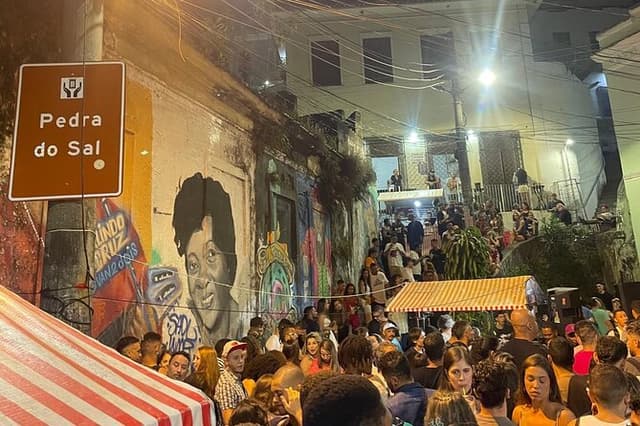
Most cities treat Monday as something to survive. Rio treats it as an occasion. Head to Pedra do Sal, the historic outcrop in the Saúde neighborhood, right in the heart of what's known as Pequena África, Little Africa, for one of the oldest and most beloved samba circles in the entire city, running for more than fifteen years now on this exact spot where enslaved and freed Afro-Brazilians once gathered, and where, by most accounts, the earliest urban samba first took shape. From around 7pm, musicians set up at the foot of the rock itself, an unamplified crowd sings along to songs everyone but the tourists seems to already know by heart, and vendors sell beer out of coolers for a few coins a can. It's free, it's outdoors, and it's about as close as Rio gets to a living museum you're allowed to dance in. If you want a second option on the same night, the Samba do Trabalhador at Clube Renascença in the northern neighborhood of Andaraí runs earlier in the evening, led by the songwriter Moacyr Luz, and has its own decades-long following among people who take their Monday samba seriously.
Tuesday: Beco do Rato
By Tuesday, the crowd shifts toward Lapa, Rio's old bohemian quarter beneath the arches of the Carioca Aqueduct, and specifically to Beco do Rato, a narrow alley bar known for spontaneous, unbilled performances by serious musicians who simply turn up to play. The vibe here is looser and more improvised than Pedra do Sal's older traditions: outdoor tables, a young and mixed crowd of locals and in-the-know visitors, and the sense that you might be watching someone who'll be famous in five years, or someone who already is and just felt like playing a low-key Tuesday set.
Wednesday: Carioca da Gema
Wednesday belongs to Carioca da Gema, one of the most storied old houses in Lapa's bohemian scene, set inside a converted townhouse where space is tight enough that getting in on a good night is its own small achievement. The upside of the squeeze is the sound: some genuinely major names in samba have passed through this stage, and the room's size means you're never far from the music no matter where you end up standing.
Thursday: Fundição Progresso
Thursday has become something of an unofficial second Friday across urban Brazil in recent years, and in Lapa that instinct finds its home at Fundição Progresso, a cultural center known among regulars by the nickname "Sibic," after the name of the samba crew that plays there. The acoustics in the old industrial building are genuinely excellent, the crowd skews toward people getting a head start on the weekend, and by the time the night winds down you'll understand why plenty of cariocas treat Thursday as the real start of their weekend.
Friday: Vidigal, for the View and the Sunset
Friday is the day to leave Lapa's Bohemia behind and head up the hill into Vidigal, the favela wedged between Leblon and São Conrado that's spent the last decade turning into one of Rio's most talked-about neighborhoods. The destination is Bar da Laje, a rooftop bar and restaurant with what might be the single best sunset view in the city, Leblon, Ipanema and Arpoador laid out below, the Atlantic stretching to the horizon, and one that's become significant enough to the city's cultural life that it was officially declared a Historical, Cultural and Touristic Heritage site of Rio de Janeiro state in 2022. Live music and DJ sets run heaviest from Friday through Sunday, and the bar has quietly become something of a celebrity magnet over the years, having reportedly hosted guests ranging from David Beckham to Kanye West. Get there while there's still daylight, order a caipirinha and a plate of carioca bar snacks, and watch the sky do the rest of the work. A moto-taxi or a shuttle van up the hill is the easiest way in, walking is possible, but the view is a much better reward if your legs aren't already tired when you arrive.
Saturday: Rua do Senado, the World's Coolest Street
Saturday is for exploring Rua do Senado, a street in Rio's historic downtown that would have been a solid, samba-adjacent recommendation on its own even a few years ago, but which in 2025 was voted the single coolest street on the entire planet by Time Out magazine, beating out contenders in New York, Tokyo, Osaka, Berlin and Porto, and becoming the first street anywhere in Latin America to top that global ranking. The street mixes century-old institutions like Armazém Senado, open since 1907 and still hosting a lively Saturday-afternoon samba circle over cold draft beer, with a new wave of restaurants and bars, Lilia, Labuta Bar, Labuta Braseiro, Destilaria Maravilha. That have arrived over the last several years and turned the block into a genuine meeting point for a younger, design-and-food-conscious crowd, all just a short walk from Lapa and Praça Tiradentes. It's a good illustration of how quickly Rio's map of "what's cool right now" can shift: the recognition landed the street its own heritage-protection bill within months, an unusually fast turnaround for a place to go from up-and-coming to officially safeguarded.
Sunday: The Hippie Fair, the Beach, and One Last Samba
Sunday in Rio slows down and spreads out. Mornings belong to the Feira Hippie de Ipanema, a sprawling open-air crafts market that's occupied Praça General Osório every Sunday since 1968, when a small group of countercultural artists first started selling paintings on the square, it's since grown into one of the largest open-air markets anywhere, with jewelry, leather goods, glasswork and souvenirs spread across hundreds of stalls, and it makes a natural stop either before or after a morning at the beach. Speaking of which: Sunday is also when Rio closes several of its beachfront avenues to car traffic entirely, turning the seaside promenades of Copacabana, Ipanema and Leblon into one long, uninterrupted lane for cyclists, joggers and rollerbladers, which is as good a reason as any to rent a bike for the morning. As the afternoon fades into evening, head to Samba da Volta in the historic downtown for a final, gentler samba circle, the traditional way cariocas ease themselves back toward Monday, which, as you now know, is really just the start of the whole cycle again.
A Few Things That Are New Since 2023
Rio's weekly rhythm has genuinely deep roots, but it isn't frozen in amber, new habits keep grafting themselves onto old traditions. The explosive growth of the Zona Portuária around Porto Maravilha has brought fresh nightlife and dining options to Saúde and Gamboa, not far from the Monday scene at Pedra do Sal. The city's restaurant scene has been reshaped by the arrival of the Michelin Guide in 2024, which has pushed a wave of ambitious new openings, 2025 alone brought buzzy arrivals like Gonza in Jardim Botânico and Ophelia in Ipanema. Rooftop and beachfront lounge culture has spread well beyond the traditional kiosks, with newer arrivals like VaiBe Beach Lounge in Barra da Tijuca drawing a younger crowd looking for table service on the sand. And the international spotlight has followed: in 2025, the Spanish-Colombian star Rosalía chose Rio for an intimate listening session ahead of her album LUX, one more small sign that the city's cultural calendar, however proudly traditional in places like Pedra do Sal or the Sambódromo, is still very much being written in real time.
Main sources: Viaje na Viagem; CNN Brasil; Guia da Semana; QuintoAndar guides; Travel.com.br ("Um samba por dia no Rio de Janeiro"); Dicas de Viagem; Monitor Mercantil (Pedra do Sal); Time Out Rio de Janeiro (Rua do Senado, world's coolest street 2025, and 2025 restaurant openings); The Rooftop Guide; Super Rádio Tupi (Bar da Laje heritage status); The Brasilians; Culture Trip and Expedia (Feira Hippie de Ipanema history). Data and articles 2010-2026.
Also in Life in Rio
New Year's Eve: Inside the World's Biggest Réveillon
How Copacabana beach became the site of the largest fireworks display on the planet.
Carnival: The Best Excuse on Earth to Be a Little Ridiculous
The samba school parades, and the street blocos that turn the whole city into a party.
A Night at the Maracanã: The Independent Traveler's Guide
Tickets, sectors, facial-recognition entry, and how to get in and out safely on your own.