Centro & Historic Rio
Saúde
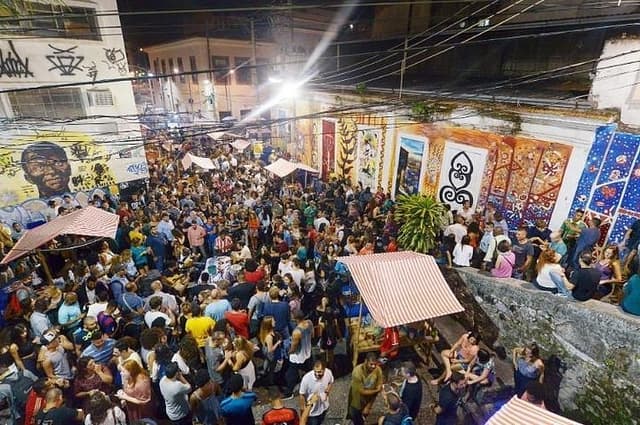
Home to Pedra do Sal, the birthplace of samba, and Rio's Afro-Brazilian heritage.
Why It's Beautiful, and Why You Should Visit
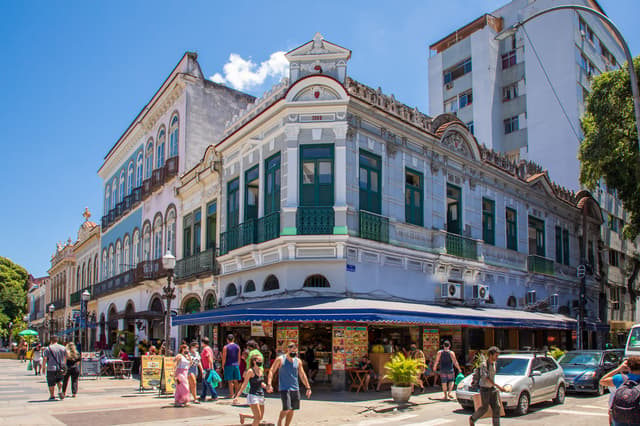
Saúde is one of three historic neighborhoods making up Rio's port district, along with Gamboa and Santo Cristo, and together they form what's now known as Pequena África, or Little Africa, a term coined by the samba musician and artist Heitor dos Prazeres to describe this stretch of the city where Afro-descendant presence and culture run deepest and most visibly. Its narrow, sloping streets, colonial-era row houses, and small museums and cultural centers dedicated to Afro-Brazilian memory make it one of the most authentic and least touristy corners of the historic downtown, and one now undergoing a full-scale revival thanks to the Porto Maravilha project.
A Bit of History
For two centuries, Saúde, together with Gamboa and Santo Cristo, was the beating heart of Rio's port and commercial life, and together they make up the area historically known as Pequena África: it was here, between 1811 and 1831, that more than a million enslaved Africans arrived through the nearby Cais do Valongo, making this stretch of coastline the primary point of entry for the transatlantic slave trade in the Americas. Out of that painful history also emerged important Afro-Brazilian cultural traditions, including samba and capoeira, both now recognized by UNESCO as intangible cultural heritage. From the 1960s onward, as port traffic shifted to containers and the Elevado da Perimetral overpass was built, the area entered a long period of decline and marginalization, becoming more a place to pass through than to live in.
The Real Estate Market: 2020 to 2026
Saúde is a core part of the sweeping Porto Maravilha urban regeneration project, the largest joint public-private urban operation in Brazilian history (an investment of roughly R$8 billion (~$1.6 billion) over fifteen years), launched in 2009 ahead of the 2016 Olympics and only now entering its full real estate maturity. Since the area's first residential launch, Rio Wonder (June 2021, with 1,224 units sold in under a month), a string of other projects have followed, Rio Energy, Vargas, Pateo Nazareth, bringing a growing residential population back to the port district for the first time in decades: in 2025 alone, roughly 2,700 new apartments were delivered across the wider port area, and the city estimates the local population could grow from today's 13,000 to as many as 45,000 by 2029. In neighboring Santo Cristo, the price per square meter had already topped R$8,000 (~$1,569) by 2026, up sharply from the initial 2021 launch prices, a growth rate that now outpaces even established neighborhoods like Tijuca and Recreio dos Bandeirantes. Roughly 70% of transactions in the region use FGTS, Brazil's payroll-linked housing fund, a sign that most buyers are purchasing to live in, not to speculate.
Interest From Foreigners and Locals Alike
For cariocas, Saúde now represents a real opportunity to live close to downtown at prices still well below the Zona Sul, against a backdrop of heavy public investment and improving infrastructure (the VLT tram, the Museu do Amanhã, the new Orla Conde waterfront). For international observers and an increasingly culturally engaged tourism sector, Saúde and Pequena África as a whole are emerging as one of Brazil's most significant places for telling the story of the African diaspora: in September 2025, President Lula signed a law recognizing the Cais do Valongo as Afro-Brazilian historical and cultural heritage essential to national identity, while an initiative called "Viva Pequena África" received R$73 million (~$14.3 million) in dedicated funding for the cultural revitalization of the area.
Main sources: PortusOnline, "Porto Maravilha: revitalização, sustentabilidade e preservação do patrimônio"; Almapreta.com.br; Jornal do Brasil (Cais do Valongo, Law 15.203/2025); Portas.com.br (Porto Maravilha and Santo Cristo real estate data, 2025-2026); RioOnWatch. Data and articles 2025-2026.
Getting Here
Saúde has no metro, it runs on the VLT (Rio's light rail) instead, with a stop in the neighborhood a few minutes' ride from Praça Mauá and an easy, walkable or VLT connection to Cinelândia and Carioca in Centro.
Thinking about renting or buying in Saúde?